From outdated to outstanding, we make remodeling feel effortless
From outdated to outstanding, we make remodeling feel effortless

How Much Does It Cost to Reglaze a Tub in 2026?
Professional bathtub reglazing typically costs a few hundred dollars for a standard tub, with current national estimates commonly landing around $337 to $631 and an average near $483. Specialty tubs, extensive surface repairs, difficult access or additional refinishing can push the price toward or above $1,000. Your final price depends mainly on the tub’s material, size, condition, preparation required, labor rates and finish selected.
TL;DR
- Typical cost: Current national estimates put professional tub refinishing around $337 to $631, with an average of about $483. These are broad estimates, not guaranteed local prices.
- Pricing is usually per tub: Contractors generally price the job based on the particular bathtub and the amount of preparation and repair it requires rather than simply charging by square foot.
- The process takes several hours: A standard professional reglazing job may take roughly two to five hours, although repairs or specialty tubs can require more time.
- Curing matters: The tub generally needs to remain unused while the new finish cures. Manufacturer or contractor instructions commonly call for at least 24 to 48 hours before use.
- A properly maintained finish can last for years: Published professional refinishing guidance commonly places useful service life around 10 years or more, with the actual lifespan depending heavily on preparation, coating, use and maintenance.
- Reglazing is not a structural repair: It can improve a worn or damaged surface, but serious cracks, leaks or deterioration may make replacement the more appropriate option.
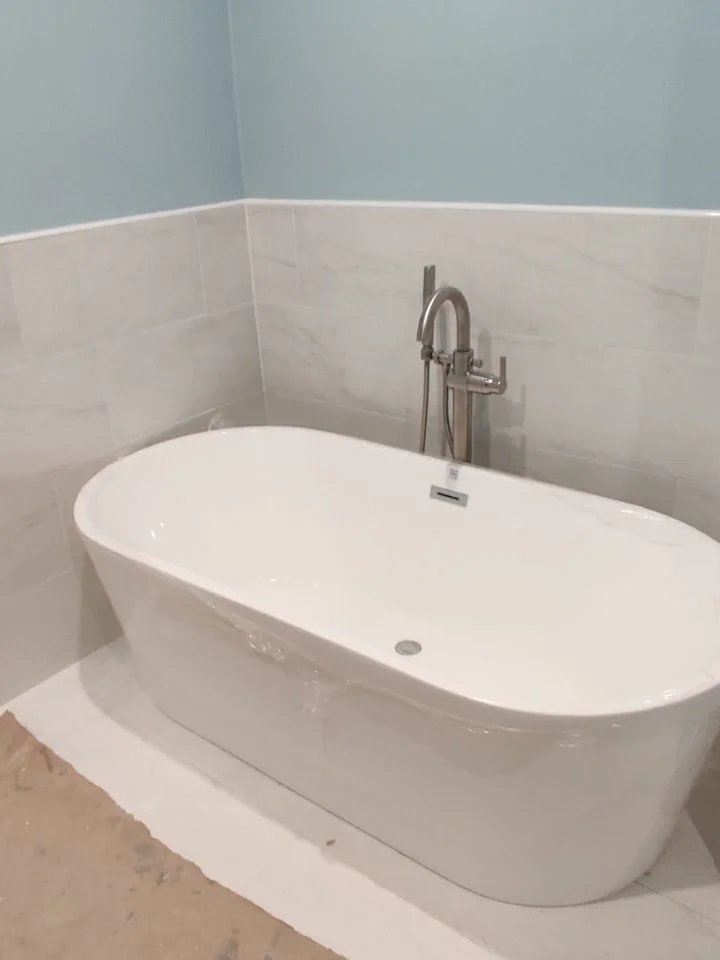
How Much Does It Cost to Reglaze a Tub?
The most useful way to think about bathtub reglazing cost is as a project price for one existing tub, rather than a universal price per square foot.
Current 2026 estimates from Angi and HomeAdvisor place many professional bathtub refinishing projects in the $337 to $631 range, with an average around $483. Angi notes that specialty methods and unusual projects can reach about $1,000.
Those numbers are useful for establishing a starting point, but they should not be treated as a quote for a particular bathroom.
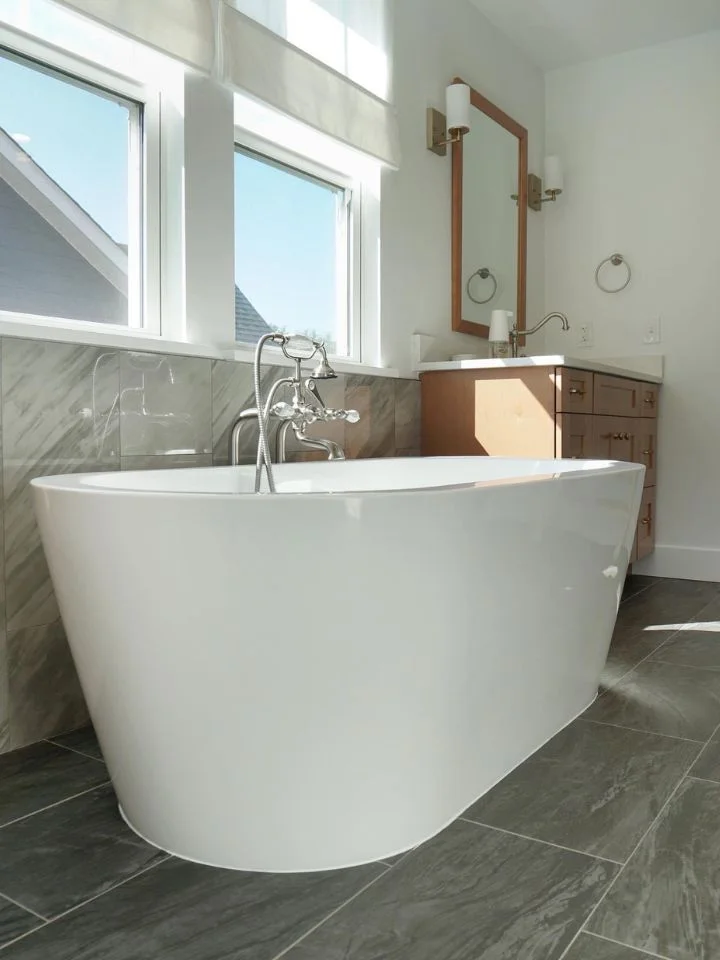
For example, a straightforward standard tub with a sound surface may require much less preparation than an older tub covered with peeling coatings, rust, chips or deep scratches. A freestanding or claw foot tub can also require more labor because more of the tub may need to be prepared and refinished.
For a homeowner in New York, the local labor market and the specifics of the bathroom can also affect the final estimate. The only reliable way to determine the actual price is to have the existing tub assessed and receive a written scope of work.
What Affects the Cost of Tub Reglazing?
Several factors can move a tub reglazing estimate significantly. The important question is not simply, “How big is my tub?” It is, “How much work is required to leave the existing surface ready for a new coating?”
1. Tub Material and Size
The material underneath the finish affects preparation and application. Common bathtub materials include:
- Fiberglass.
- Acrylic.
- Porcelain or porcelain enamel surfaces.
- Cast iron.
- Steel with an enamel coating.
Different materials require different preparation approaches and some are more sensitive to damage or improper coating adhesion.
Size and shape matter as well. A standard alcove tub generally has less exposed exterior surface than a freestanding or claw foot tub. A tub shower combination can also involve additional wall surfaces if those areas are included in the refinishing work. Current cost data shows that fiberglass and specialty tubs can have wider price ranges than straightforward porcelain, cast iron or enamel refinishing.
2. Surface Condition and Repairs
The condition of the existing surface is one of the biggest cost variables. A tub with ordinary discoloration and surface wear may need relatively straightforward preparation. A tub with chips, scratches, rust, gouges or previous coating failure can require considerably more work.
Potential preparation or repair tasks include:
- Removing loose or failing coating.
- Cleaning away soap residue and mineral buildup.
- Degreasing the surface.
- Sanding or otherwise preparing the existing finish.
- Filling small chips or surface imperfections.
- Addressing rust before coating.
- Repairing localized damage.
- Preparing areas where an earlier refinishing job has failed.
A contractor should identify these items before giving you a firm price. If a quote is unusually low because significant preparation has simply been left out, the savings may not be real.
3. Labor and Location
Labor rates vary by region, contractor, scheduling requirements and project complexity. The work also requires more than simply spraying a new color onto an old bathtub. Cleaning, masking, surface preparation, repairs, coating application, cleanup and curing requirements all contribute to the job. Local conditions in New York can therefore affect pricing even when two tubs appear similar.
4. Color and Finish
Changing the tub to a standard white finish may be straightforward, while a specialty color or custom color match can add material, preparation or application considerations.
Color also matters when the existing surface is substantially different from the desired finish. The contractor may need to account for how well the new coating will cover the existing color.
If a contractor offers several finish options, ask whether the quoted price includes the color you want or whether a special color carries an additional charge.
5. Accessibility
A bathtub that is easy to access and mask can be simpler to refinish than one surrounded by tight spaces, built-in cabinetry, fixtures or other obstacles.
The amount of masking and protection required matters because overspray and refinishing materials must be controlled carefully.
6. Previous Refinishing
A tub that has already been reglazed deserves extra attention. The new coating has to bond to an appropriate surface. If an old finish is peeling, separating or otherwise failing, simply applying another coating over it is unlikely to solve the underlying problem.
Ask the contractor whether the existing coating needs to be removed and how that preparation is included in the estimate.
Planning Your Next Home Project?
From outdated kitchens to tired bathrooms, Elite Space Remodeling helps turn your ideas into spaces you’ll love living in.
What Does Professional Tub Reglazing Include?
Reglazing is often used interchangeably with bathtub refinishing or resurfacing, although contractors may use these terms somewhat differently. In practical terms, the process involves restoring the existing surface and applying a new finish rather than removing the bathtub and installing another one. A professional job typically involves several stages.
1. Surface Preparation
Preparation is one of the most important parts of the entire job. The surface needs to be thoroughly cleaned and degreased so that contaminants do not interfere with adhesion. Existing coatings that are loose or failing may need to be removed. Depending on the material and coating system, the surface may also require mechanical abrasion or another preparation method.
The surrounding bathroom surfaces should be protected before coating materials are applied. A glossy finish can look impressive when the job is finished, but the appearance depends heavily on what happens underneath it.
2. Repairs and Priming
Small chips, scratches and other surface imperfections may be repairable before the new finish is applied. The exact repair method depends on the tub material and the damage. A surface coating is not a substitute for fixing a serious structural problem.
After preparation and repairs, an appropriate primer or bonding system may be used according to the coating manufacturer’s requirements.
3. Coating Application
The new coating is then applied to the prepared surface. The number of coats, application method and products used vary by refinishing system. A professional should be able to tell you what type of coating system is being used and what preparation it requires. The goal is a smooth, consistent surface with proper adhesion.
4. Curing and Final Inspection
The finished tub cannot necessarily be used immediately. Curing is different from simply waiting for the surface to feel dry. The coating needs time to reach the required level of hardness and adhesion. For example, Miracle Method’s current care instructions require refinished surfaces to remain free from water and use for at least 24 to 48 hours, following the technician’s specific instructions.
Before the bathroom goes back into normal use, the contractor should inspect the finish and confirm the appropriate cure time and care requirements.
Tub Reglazing vs Tub Replacement
Reglazing and replacement solve different problems.
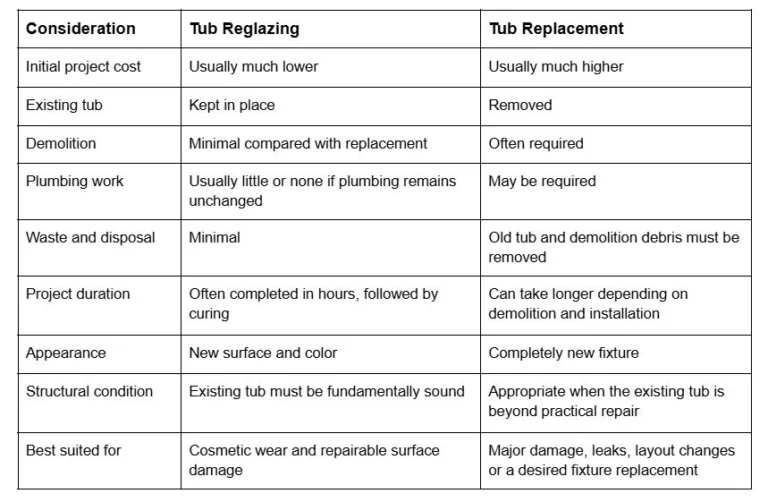
Current cost estimates illustrate why homeowners often consider refinishing first. Angi reports professional bathtub refinishing averaging around $483, while its 2026 replacement estimates put full bathtub replacement at a much higher average, although actual replacement costs vary widely with the tub, demolition, plumbing, installation and surrounding work.
Replacement also introduces decisions that reglazing generally does not: removing the old tub, disposing of it, checking the surrounding structure, installing the new fixture, reconnecting plumbing and potentially repairing walls or flooring affected by the work.
That does not mean reglazing is automatically the better choice. If the bathtub itself is failing, spending money on a new surface may only postpone a replacement you will eventually need.
For a larger bathroom remodeling project, the decision may also depend on whether the tub’s size, shape, location or plumbing arrangement fits the new design.
Planning Your Next Home Project?
From outdated kitchens to tired bathrooms, Elite Space Remodeling helps turn your ideas into spaces you’ll love living in.
How Long Does a Reglazed Tub Last?
A professionally refinished tub can remain usable for many years, but there is no universal lifespan that applies to every project.
Current industry and consumer guidance commonly places professional refinishing around 10 years or more, with some sources citing roughly 10 to 15 years under appropriate conditions.
The quality of the surface preparation is a major factor. So are the coating system, curing, frequency of use, cleaning products, standing water and physical impact.
Maintenance matters because a refinished surface is a coating. It can be damaged by practices that would also damage many other finished bathroom surfaces.
Miracle Method’s current care guidance recommends non abrasive cleaners and warns against abrasive pads, harsh acids, bleach containing cleaners and prolonged exposure to certain chemicals. It also recommends allowing the surface to dry and avoiding prolonged moisture during the curing period.
Follow the specific care instructions supplied for your coating system rather than assuming every reglazed tub can be cleaned in exactly the same way.
Is Reglazing a Tub Worth It?
It can be, particularly when the existing bathtub is structurally sound and the problem is mainly the surface. Reglazing deserves consideration when:
- The tub has stains or discoloration that ordinary cleaning cannot correct.
- The surface has minor chips or scratches.
- The finish has become dull or worn.
- You want to change the color.
- The existing tub has a shape or material you want to keep.
- You want to avoid the demolition associated with replacement.
- The surrounding bathroom does not require major reconstruction.
The value becomes less clear when the tub has serious underlying problems. A new surface cannot fix a leaking fixture, unstable structure or extensive deterioration. It may improve the appearance of a damaged bathtub temporarily, but that does not address the cause of a structural problem.
Question is therefore not simply whether reglazing is cheaper. It is whether the existing tub is a good candidate for refinishing.
When Should You Replace Instead of Reglaze a Tub?
Replacement may make more sense when the bathtub has significant structural damage that cannot reasonably be corrected through surface repair. Examples include:
- Major cracks.
- Persistent leaks caused by the tub itself.
- Severe deterioration.
- Structural instability.
- Damage extending beyond the surface.
- A tub that has already undergone multiple unsuccessful refinishing attempts.
- A remodeling plan that requires a different tub size, shape or configuration.
Replacement can also make sense when you are already undertaking substantial bathroom remodeling and want to change the layout or fixture configuration.
On the other hand, replacing a structurally sound tub solely because its finish looks old can introduce demolition, disposal, installation and potentially plumbing or finish repair work that may not be necessary.
A contractor should evaluate the condition of the actual tub before recommending either option.
Planning Your Next Home Project?
From outdated kitchens to tired bathrooms, Elite Space Remodeling helps turn your ideas into spaces you’ll love living in.
How to Get an Accurate Tub Reglazing Estimate
Do not compare estimates based only on the final dollar amount. Ask each contractor what is included.
- Is the quoted price for the entire tub or only the interior surface?
- Does the estimate include cleaning, sanding, stripping and other surface preparation?
- Are chips, scratches, rust or small repairs included?
- What coating system will be used?
- Is the requested color included in the quoted price?
- How long will the bathroom need to remain unused?
- What cleaning products should be avoided afterward?
- What happens if the existing coating is already failing?
- Is any warranty provided, and what exactly does it cover?
- Are surrounding surfaces such as tile or the tub surround included or priced separately?
The warranty question deserves particular attention. A warranty can cover very specific problems rather than guaranteeing that a finish will remain perfect indefinitely. For example, Miracle Method’s published residential warranty covers failure of adhesion for certain refinished surfaces for five years, while excluding several conditions such as damage from impact, improper cleaning, plumbing problems and other causes.
A written estimate should also make clear whether additional repairs are included or charged separately.
Conclusion
The answer to how much does it cost to reglaze a tub is usually measured in hundreds rather than thousands of dollars for a standard professional job, but the condition and type of bathtub can change the estimate substantially. Current national pricing data places many projects around $337 to $631, while specialty work can cost considerably more.
The bigger decision is whether your existing tub is a good candidate for refinishing. If the tub is structurally sound but has an unattractive, worn, stained or damaged surface, reglazing can provide a new finish without removing the fixture. If the tub has major structural problems, persistent leaks or deterioration that extends beyond the surface, replacement deserves serious consideration.
For homeowners planning a broader bathroom remodeling project, Elite Space Remodeling can help evaluate whether refinishing or replacement makes sense as part of the renovation.
A clear written estimate that separates preparation, repairs, coating, curing requirements and any additional work will give you a much better basis for comparing your options.
Planning a Remodel?
Get practical advice before you start
Thinking about updating your kitchen or bathroom? Explore our remodeling services and learn what to consider before starting your project.